When you choose a window curtain, you, like most folks, might focus on stuff like color, fabric, or the blackout lining. But there is one thing that can change the look and function of your window treatment. That thing is the heading style, and there are two most popular options for it; taped curtains and eyelet curtains. When you take a glance at them, they might look similar when hanging, but the difference is in their construction, appearance, and functionality.
What Are Taped Curtains?
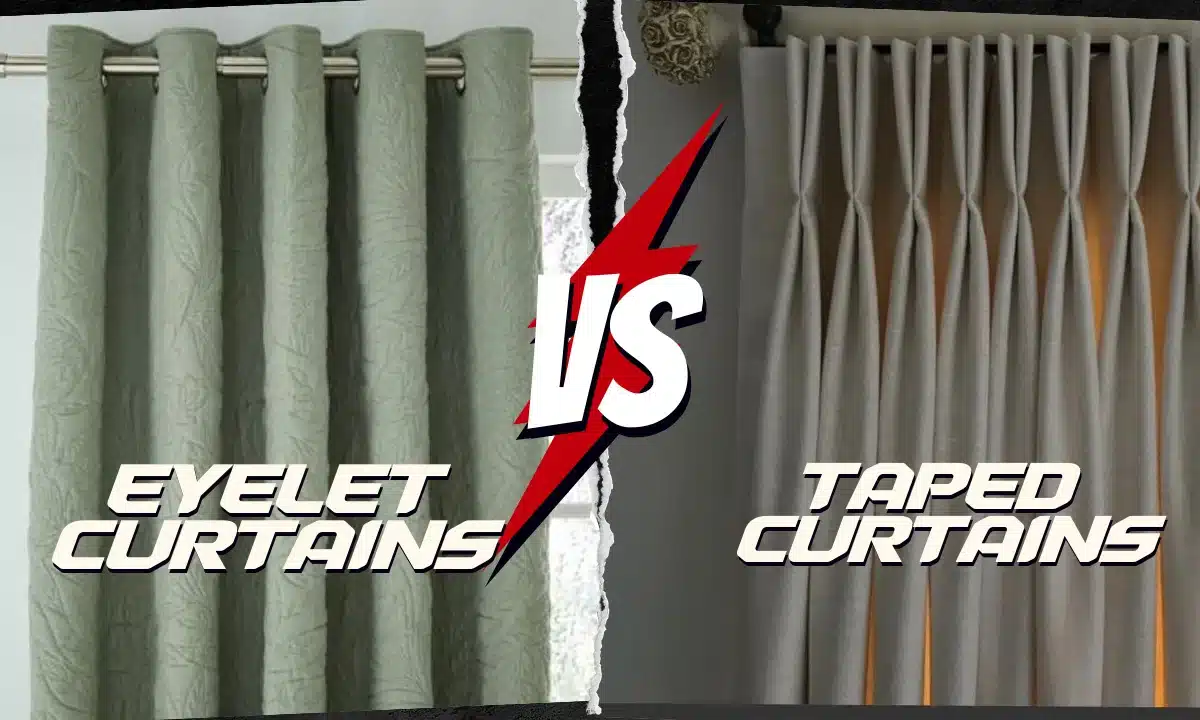
Taped draperies are called pencil pleat curtains, which have stitched heading tape at the upper part. This tape has cords running through i,t and when you pull on them tightly, they will gather the fabric to create nice-looking pleats. This tape usually has a small pocket on its back where the curtain hooks are fitte,d which will attach to the curtain tracks or poles with rings.
What Are Eyelet Curtains?
Eyelet window curtains are also called by the name grommet curtains that have large metal rings stitched right into the top and directly into the fabric. The curtain pole passes through these rings as it slides smoothly. You don’t get gathered fabric pleats but a soft, even wave as the curtains are fully drawn. You can’t hang them on a curtain track as you need a visible rod to slide through the metal rings.
The Main Differences: Taped Curtains VS Eyelet Curtains
Today, we will tell you what the differences are between taped and eyelet curtains.
1. Appearance and Style
(i). Taped Curtains:
The trapped draperies have a classical look with their tighter pleats and a formal appearance for elegant interior themes. They are usually hung in traditional homes, formal living rooms, and work best in a layered curtain style.
(ii). Eyelet Curtains:
These metal ring curtains have a contemporary, minimalist feel with their clean, flowing fabric waves. They give a less structured appearance, which is ideal for modern spaces. If your decor is sleek and simple, these eyelets are a better fit.
2. Installation and Compatibility
(i). Taped Curtains:
A taped curtain will work best on tracks or rods as they allow an easy hook attachment, and you can adjust their height, positioning the way you like. This is because you can place these hooks at different levels on the tape to raise or lower your curtain drop.
(ii). Eyelet Curtains:
These drapes work only with a curtain pole as they slide directly onto the rod at a fixed heading height. You won’t get a height adjustment with the eyelet drapes, and you get what you measure.
3. Light Control and Insulation
A taped drapery will offer better light control when you pair it with blackout lining. As for the eyelet curtains, they will leave a small gap on the above part of the curtain rod, which allows the light and heat to pass through.
If you value insulation and blackout properties, taped window curtains are a better choice.
4. Fullness and Fabric Usage
Taped drapes allow you to adjust the fullness by loosening or tightening the cords. You can create dense pleats for a luxury styling or keep it relaxed for a softer feel. Eyelet drapes, on the other hand, have even spacing between their rings, with the wave sizing depending on the number of eyelets, pole diameter, and fabric width.
5. Ease of Opening and Closing
An eyelet drape will glide smoothly over the length of the curtain pole. Their metal rings reduce friction that makes it easy to open and close them on a daily basis. Taped curtains will also slide smoothly, but this will depend on the curtain track’s quality and the fabric’s weight.
6. Maintenance and Durability
Taped drapes have hooks that can detach during washing, but the cord must not be damaged or the pleats might need reshaping after cleaning. Eyelet curtains must have rust-resistance to them, and they must be easily removable from the heading.
7. Cost Differences
A taped curtain is usually an affordable solution which easier to customize and perfect for a bulk production. Eyelet drapes, on the other hand, are much more expensive, and they require a reinforced fabric on the top with a precise measurement. The pricing for both of them usually depends on the fabric and the additional lining.
When Should You Choose Taped Curtains?
You can choose these drapes if you wish to get that classical or luxurious look for the window appeal. You can go for these drapes if you love curtain tracks or you need a better blackout performance, or might need a pleat adjustment. They are ideal for areas like bedrooms, formal living rooms, or traditional interior spaces.
When Should You Choose Eyelet Curtains?
You can choose eyelet drapes if you love a modern design with a minimalistic appeal. You can also select this for its choice of decorative curtain poles or rods. It will offer you a smooth daily operation, and you will get evenly spaced waves. They work perfectly for modern apartments or casual spaces.
Final Thoughts
The difference between taped and eyelet curtains is never only about how they hang; it is about how they change your space. A taped curtain offers better flexibility, insulation, and interior elegance. On the other hand, eyelet curtains provide modern appeal, easy operation, and clean wave styling. The choice is yours to make, but it won’t just frame your windows, but shape the entire atmosphere of your living area.